⚠️ Important Safety Warning First
If your garage door spring is broken, the door weighs 150–400 lbs without spring support. Do not attempt to lift it alone. Manually opening a door with a broken spring requires two people minimum and should only be done in an emergency. If you can wait — call a technician instead.
The Red Cord — Your Manual Release
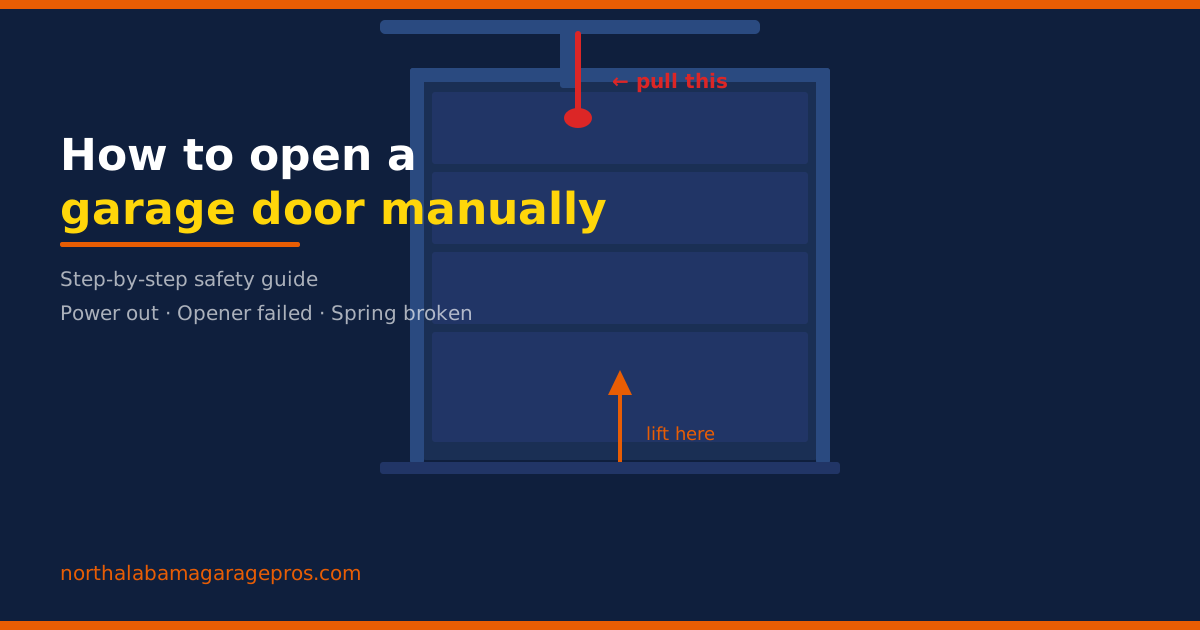
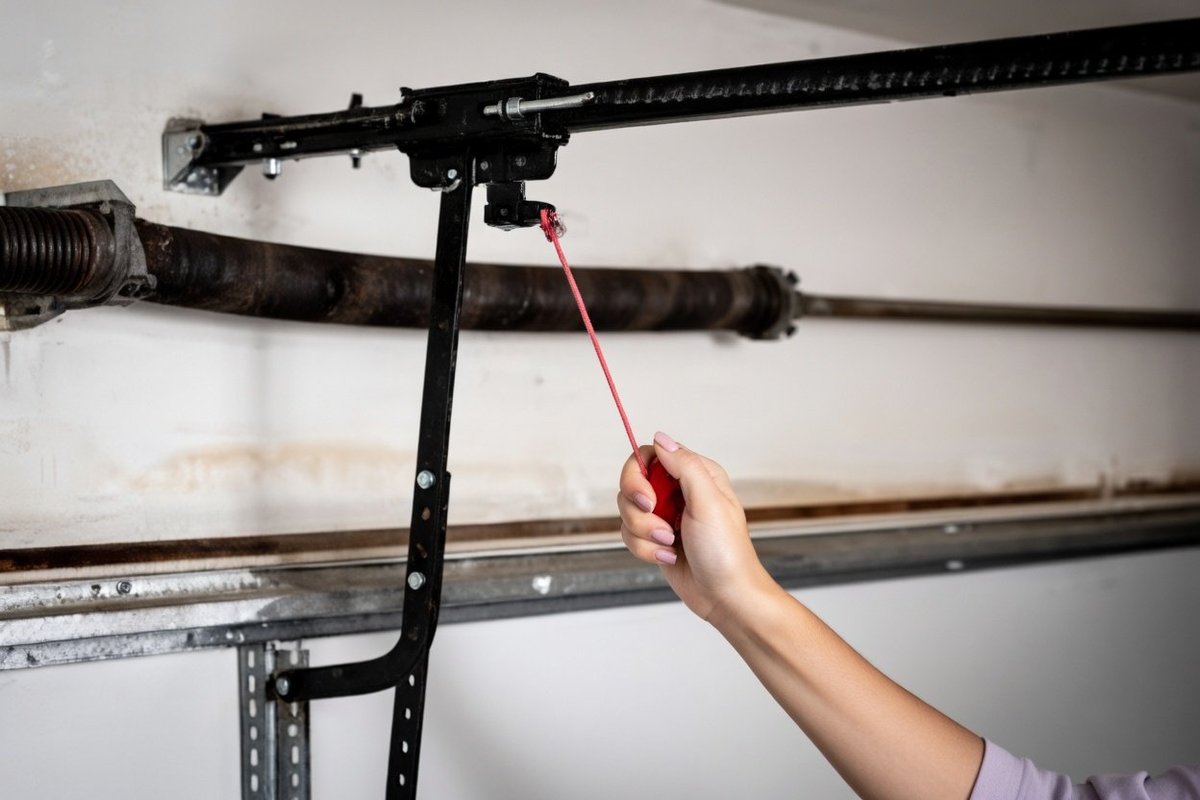
Every garage door opener has a red cord hanging from the trolley (the part that slides along the rail). This is the emergency release cord. Pulling it disconnects the door from the opener drive so the door can be moved manually. This is step one for any manual operation.
Step-by-Step: How to Open a Garage Door Manually
Park any cars clear of the door
Make sure nothing is under or in front of the door before you begin. A door under manual control can drop suddenly.
Pull the red cord straight down (or down and back)
You will feel a click or pop as the trolley disconnects from the drive carriage. The door is now in manual mode. If there is a lock lever, some systems require you to first slide it to the unlocked position.
Lift from the bottom with both hands
Grab the door handle or bottom panel with both hands and lift straight up. With functioning springs the door should feel nearly weightless. If it feels very heavy — stop. A spring is likely broken and you need help.
Prop the door open if you need to pass through
A manually held door can slide back down. Prop it with a 2x4 wedged under the bottom corner on both sides, or use locking pliers clamped on the track above a roller. Never trust a door to stay up on its own in manual mode.
To close: lower the door and lock it
Lower it slowly using both hands until it meets the floor. If your door has a manual lock (the T-bar handle), engage it now. Do not leave a manually released door unlocked overnight.
How to Reconnect the Opener After Manual Mode
Once power returns or your opener is repaired, you need to re-engage the drive trolley. Here is how:
- Method 1 (easiest): With the door closed, press the wall button or remote. The opener will run forward, the trolley will catch the carriage, and reconnect automatically on most models.
- Method 2 (manual reconnect): Pull the red cord back toward the opener motor head (away from the door) until you hear a click. This re-engages the carriage. Then test the opener.
- LiftMaster/Chamberlain specific: Pull the red cord down and back at about a 45-degree angle toward the motor head — you should feel it click into the carriage slot.
Special Situations
Power Outage — Door Won't Open at All
Many modern openers (LiftMaster 8550W, Chamberlain B6713T) include a battery backup that runs the opener for 24–48 hours during a power outage. If yours does not, pull the red cord and open manually as above. This is one of the best arguments for upgrading to a battery-backup opener in North Alabama's storm season.
LiftMaster 8550W with battery backup → AmazonBroken Spring — Door Is Extremely Heavy
If you pull the red cord and the door feels like it weighs hundreds of pounds when you try to lift, a spring is almost certainly broken. Do not force it. Two people can sometimes manage it for an emergency exit, but this should not be your ongoing solution. Call a North Alabama technician for same-day spring replacement.
See our full spring repair guide for what to expect.
Car Is Trapped Inside — Can't Get the Door Open
If you cannot lift the door even with the spring intact, check that the door is not locked. Many doors have a manual lock bar (the T-handle in the center). Make sure it is fully disengaged. Also check that the door is not jammed in the track — look for bent rollers or a panel that has come off track.
Door Won't Stay Up After Manual Release
If the door will not stay in the up position on its own, your springs are likely worn or broken — the spring counterbalance is what holds the door overhead without support. Use a prop and call for service.